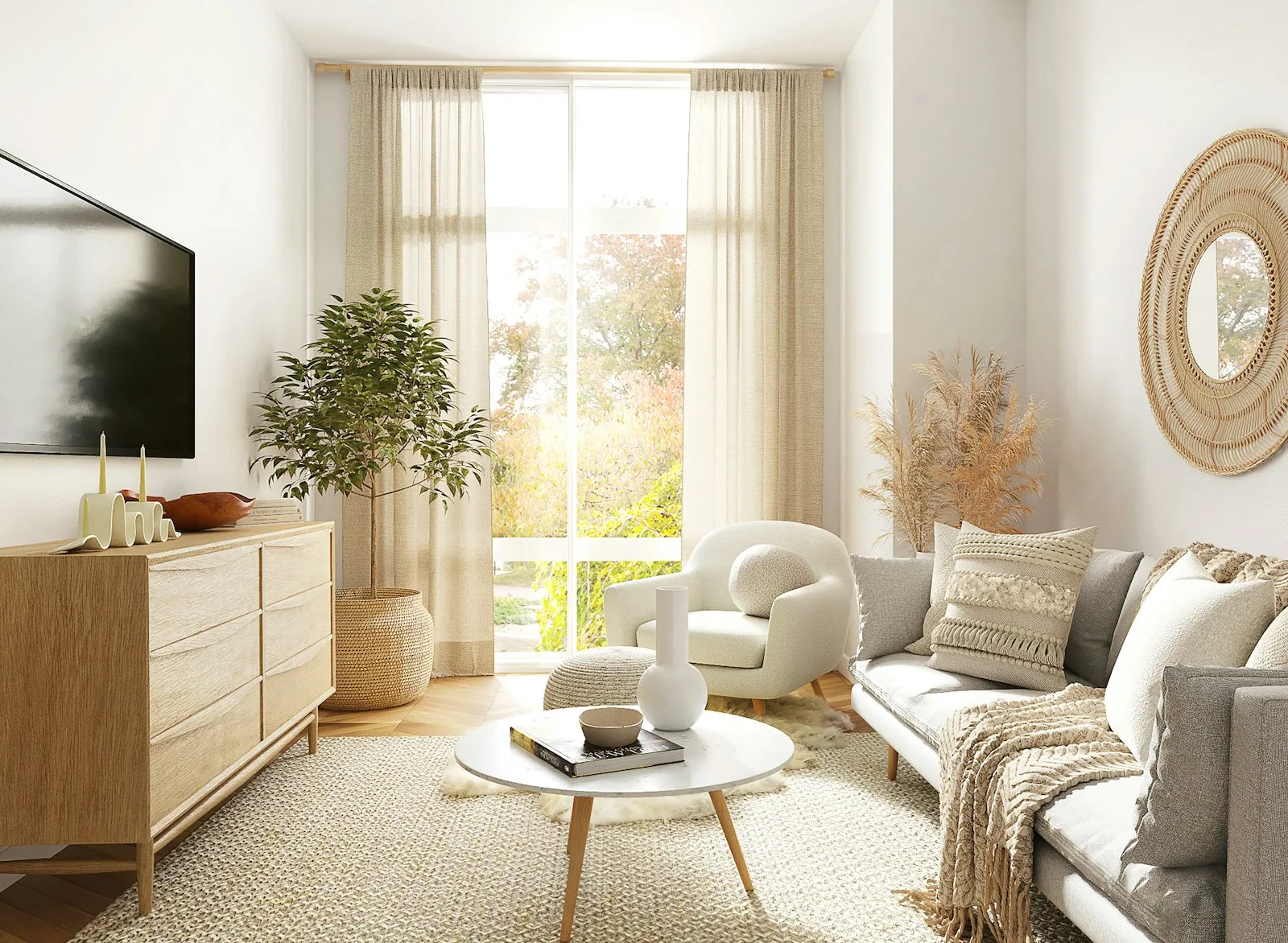
Interior Design Made Simple: Room Ideas, Living Room Layouts & Wall Decor Tips
Good interior design isn’t about filling a room with expensive things. It’s about creating a space that looks pulled together, works for the way you live, and feels like yours the moment you walk in. The good news is that the principles designers rely on are simple enough for anyone to use. In this guide, we’ll walk through the core ideas behind great interior design, then put them to work with practical room ideas, a living room layout you can copy, and wall decor tips that finish a space beautifully.
What Interior Design Really Means
Interior design is the art of planning a room so that function and beauty support each other. A designer asks three questions before buying a single cushion: How will this room be used? How should it feel? What does the architecture already give us? Answer those honestly and the rest of your decisions — layout, color, lighting, furniture and decor — become much easier.
Think of it as a layered process. You start with the “bones” (layout and flow), add a color story, bring in texture and light, and finish with personal touches like art and accessories. Skipping straight to the last layer is the most common reason rooms feel cluttered or unfinished.
7 Interior Design Principles Every Home Can Use
1. Start With a Focal Point
Every room needs one place the eye lands first: a fireplace, a large window, a statement sofa or a gallery wall. Arrange everything else to support it rather than compete with it.
2. Balance Over Symmetry
Balance means visual weight is spread evenly. That can be perfectly symmetrical (two matching lamps flanking a sofa) or asymmetrical (a tall plant on one side balanced by a stack of art on the other). Both work; lopsided rooms don’t.
3. Follow the 60-30-10 Color Rule
Use a dominant color on about 60% of the room (walls, large rugs), a secondary color on 30% (furniture, curtains) and an accent on the final 10% (cushions, vases, art). It’s the fastest way to make a palette feel intentional.
4. Mind the Scale
A tiny rug under a big sofa or a small print over a long console makes a room feel off. Choose pieces that are proportional to the furniture and the wall they live with.
5. Layer Your Lighting
Combine ambient light (ceiling or pendant), task light (reading and desk lamps) and accent light (picture lights, LED strips). Our guide to living room lighting covers this in detail.
6. Mix Textures
Linen, wool, wood, metal, ceramic and greenery keep a neutral room from feeling flat. Aim for at least three different textures in every space.
7. Leave Room to Breathe
Negative space is a design element too. Clear surfaces and open walkways make the pieces you love stand out.
Room Ideas: Build a Mood Board Before You Buy
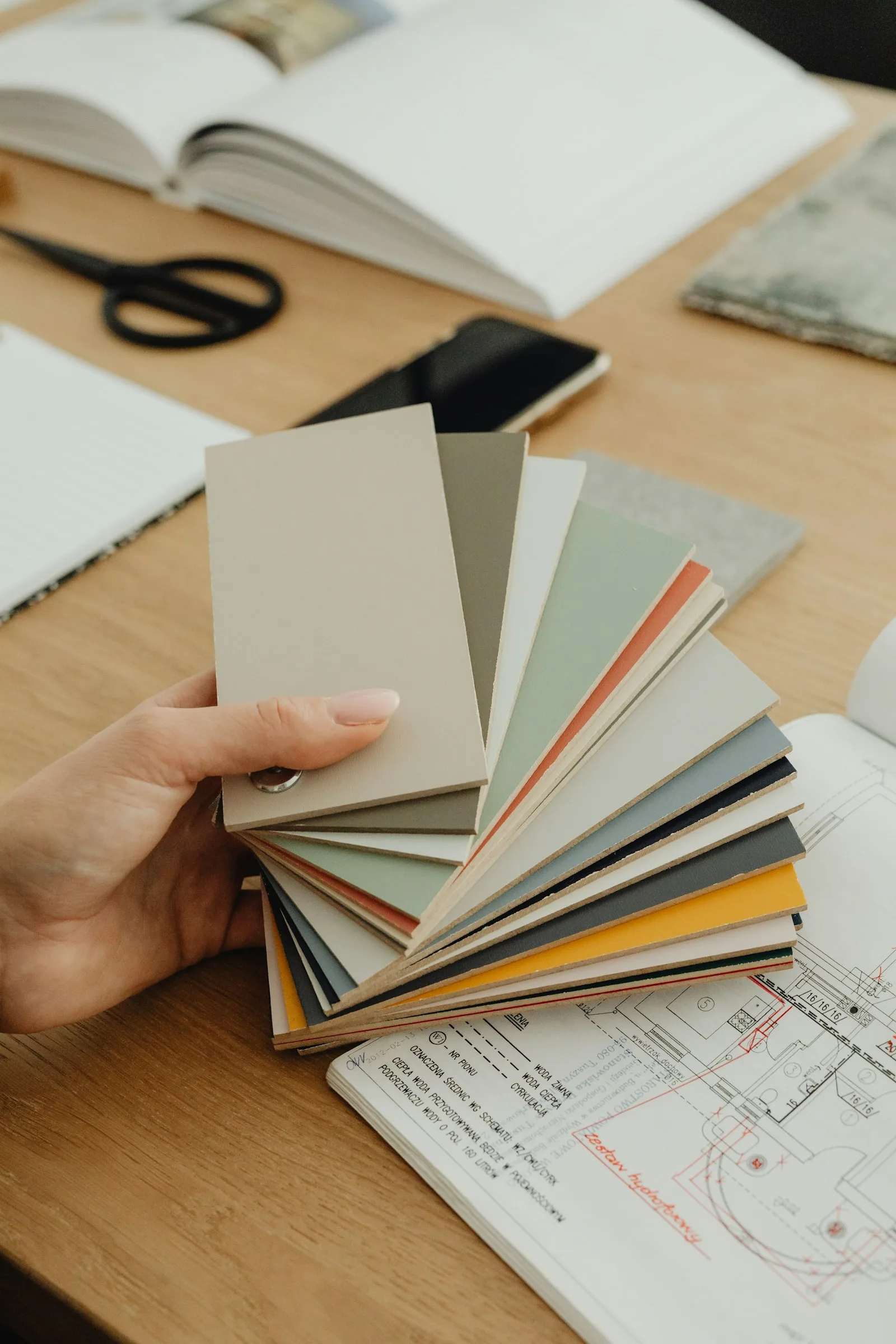
The best room ideas begin on a board, not in a shopping cart. Collect paint chips, fabric swatches, a wood sample and a few images that capture the feeling you want. Seeing them side by side shows instantly whether your choices work together — and saves you from costly returns.
- Pick a base neutral such as warm white, oatmeal or greige for the walls.
- Add a calming mid-tone like sage, dusty blue or soft clay for larger furniture.
- Choose one confident accent — terracotta, mustard or deep navy — for small doses of energy.
- Include natural materials such as oak, rattan or jute to warm everything up.
Once the board feels right, use it as a filter: if a new piece doesn’t fit the palette, it doesn’t come home.
Living Room Interior Design: A Layout That Works
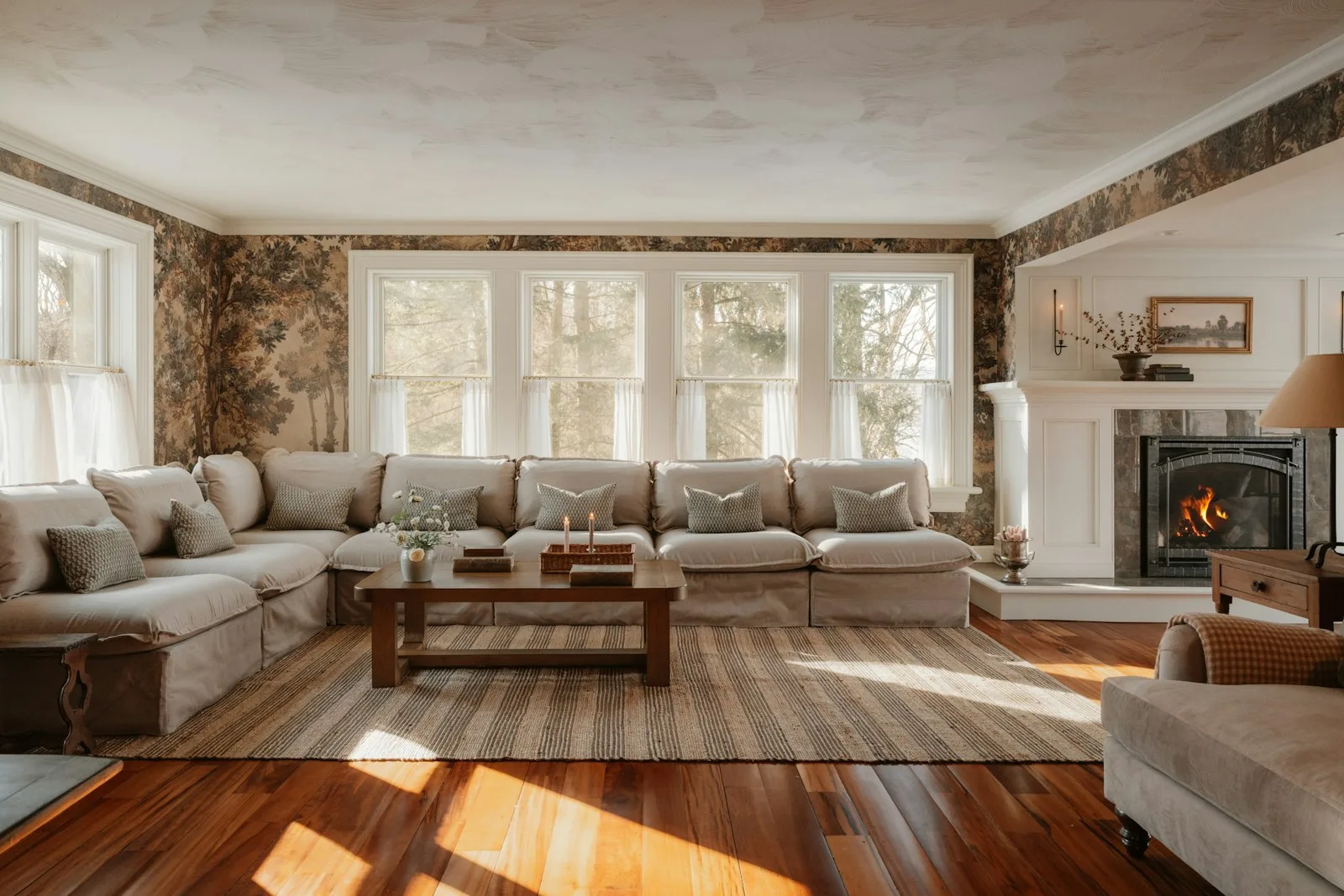
The living room is where interior design gets tested every day, so get the layout right first. The goal is a comfortable conversation zone where everyone can see each other without shouting across the room.
- Float the furniture. Pulling the sofa a few inches off the wall makes even small living rooms feel more relaxed and intentional.
- Keep seating close. Seats facing each other should sit roughly 8–10 feet apart so conversation feels natural.
- Leave 16–18 inches between the sofa and the coffee table — close enough to reach a drink, far enough for legs.
- Size the rug generously. At minimum, the front legs of every seat should rest on it.
- Protect the walkway. Keep a clear path of about 30–36 inches from the door through the room.
Wall Decor Ideas That Finish the Room
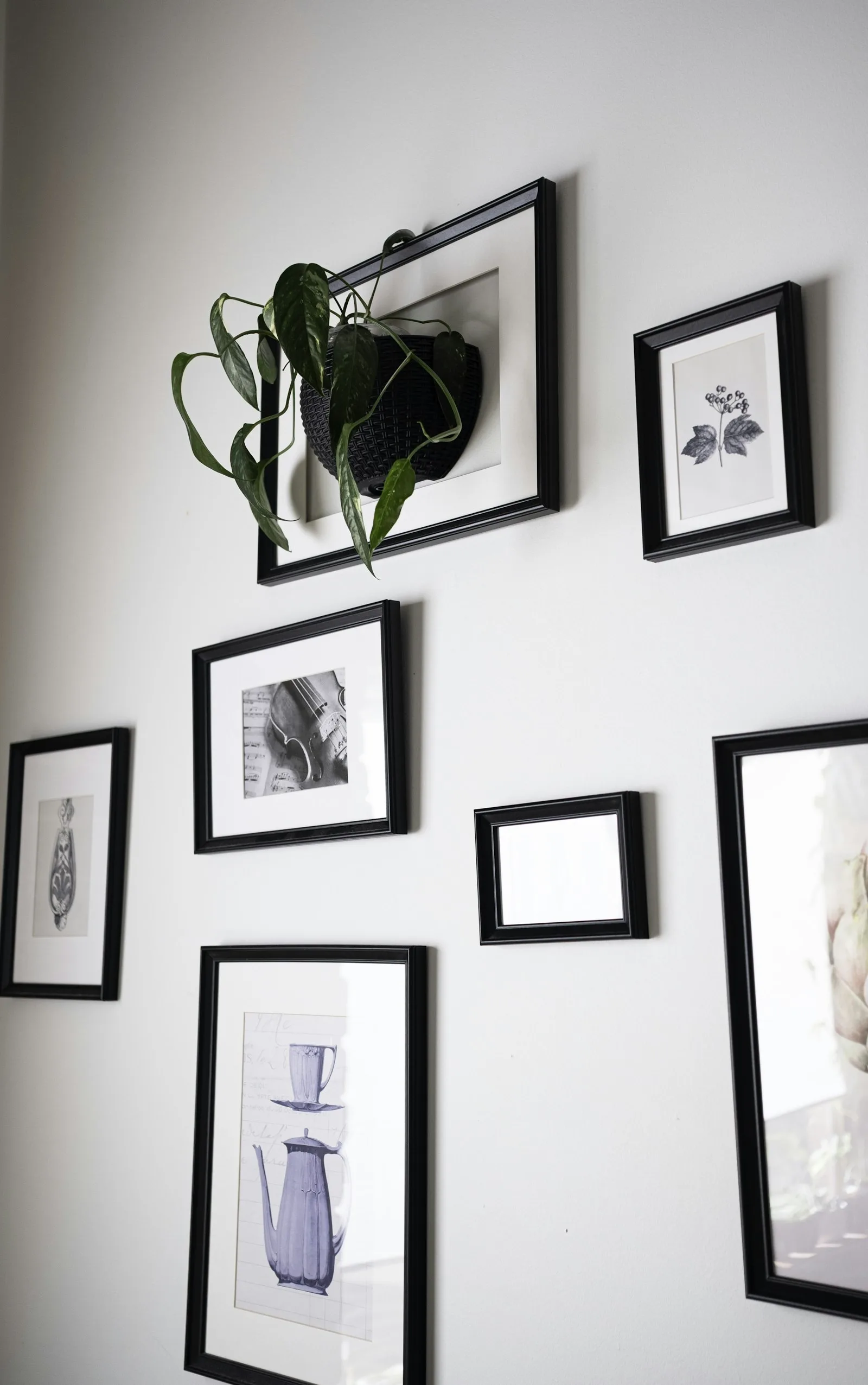
Wall decor is the layer that turns a furnished room into a personal one. Bare walls make a space feel temporary; well-chosen pieces give it character and height.
Create a Gallery Wall
Mix frame sizes but repeat one or two frame finishes (black and brass, for example) so the collection feels cohesive. Lay the arrangement out on the floor first, keep 2–3 inches between frames, and hang the center of the group at about eye level — roughly 57–60 inches from the floor. For more inspiration, see our ideas for black and white artwork.
Add a Round Mirror
A mirror bounces light around the room and softens a wall full of straight lines. Place it opposite or beside a window for the biggest brightening effect.
Try Texture on the Wall
Art isn’t the only option. Decorative wall paneling, wood wall art and metal wall decor add dimension without overwhelming a space. If you love a handmade look, our DIY wall decor for living rooms has easy weekend projects.
Get the Scale Right
Art above a sofa or console should span about two-thirds of the furniture’s width. Leave 8–10 inches between the top of the sofa and the bottom of the frame so the two read as one composition.
Room Ideas for Small Corners: The Accent Wall Reading Nook
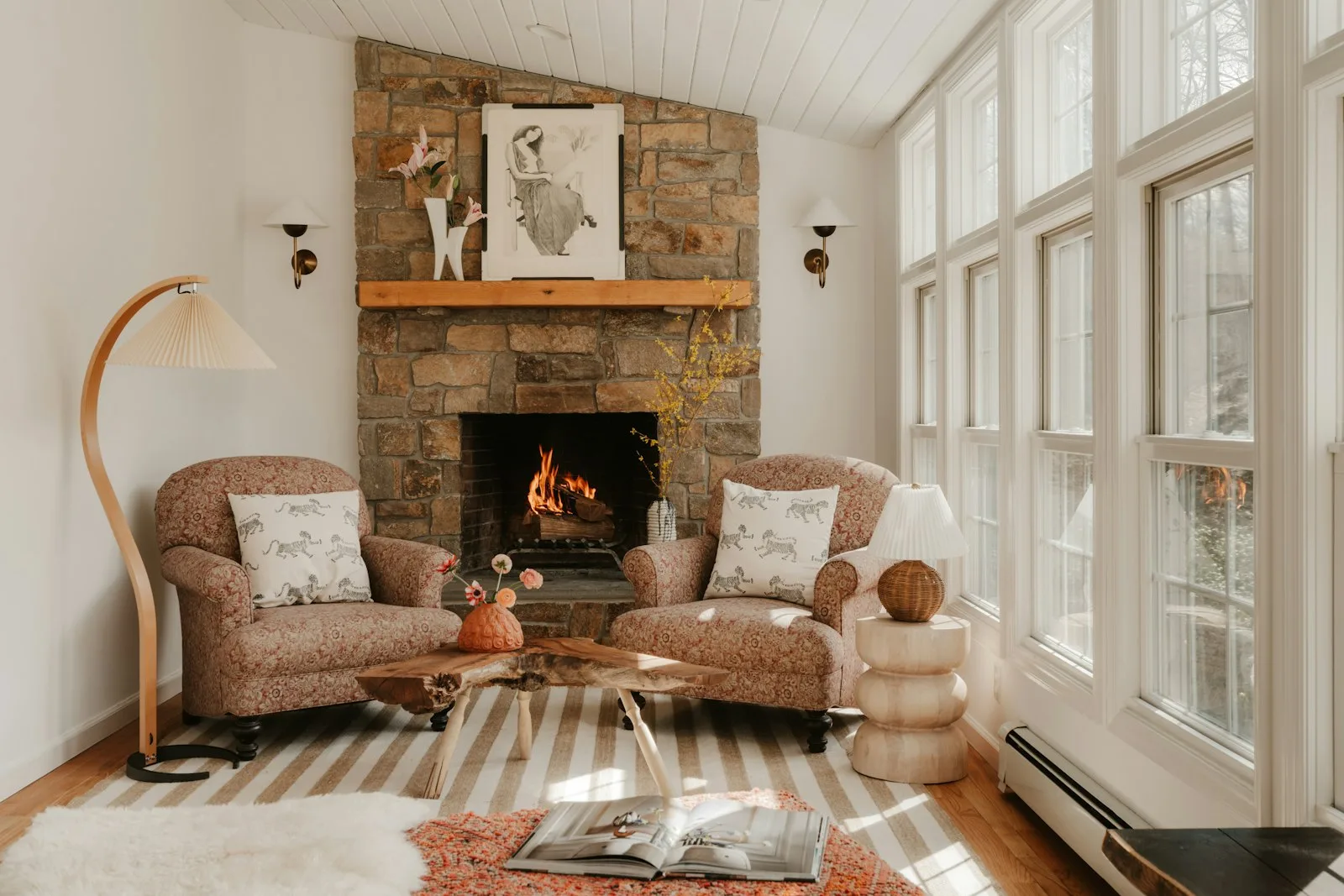
Not every great room idea needs a whole room. An unused corner can become your favorite spot with just four elements:
- An accent wall — natural stone, panel molding or a muted green or blue paint adds instant architecture.
- One or two comfortable armchairs with soft cushions in your accent color.
- A small side table and lamp for warm, focused light in the evenings.
- A floating shelf and oversized art leaned against the wall for a relaxed, collected look.
Finish with a round rug to define the zone and a trailing plant to soften the edges.
Common Interior Design Mistakes to Avoid
- Buying furniture before measuring. Always map the room — painter’s tape on the floor works wonders.
- Hanging art too high. It’s the number-one wall decor mistake; keep it at eye level.
- Relying on one ceiling light. A single overhead fixture makes rooms flat and harsh.
- Matching everything. A full furniture set from one store looks like a showroom, not a home.
- Forgetting greenery. Even one plant brings life, color and texture.
Frequently Asked Questions
What is the difference between interior design and interior decorating?
Interior design covers how a space is planned and how it functions — layout, flow, lighting and sometimes structural changes. Decorating focuses on the finishing layer: color, furniture, textiles and wall decor. Most homeowners do a bit of both.
How do I start designing my living room on a budget?
Start with paint, rearranging the furniture you already own, and better lighting. Then add a properly sized rug and a few pieces of wall decor. These changes have the biggest impact for the lowest cost.
How high should I hang wall decor?
Hang the center of a single piece or gallery wall about 57–60 inches from the floor. Above furniture, leave 8–10 inches between the furniture and the bottom of the frame.
What are easy room ideas for a quick refresh?
Swap cushion covers to a new accent color, paint a single accent wall, add a mirror, style a shelf with books and plants, or create a small gallery wall. Each takes a weekend or less.
Final Thoughts
Great interior design comes down to a clear plan and thoughtful layers: a layout that flows, a palette you love, lighting that changes with the day, and wall decor that tells your story. Start with one room — the living room is perfect — apply these ideas one step at a time, and you’ll be amazed at how quickly your house starts to feel like a designed home.